Samsung always feels 'heightened sense of crisis' so that it always looks ahead even when it's doing well - Agencies


In his 1997 book, Samsung chairman Lee Kun-hee wrote that a successful company needs a 'heightened sense of crisis', so that it always looks ahead even when it's doing well, and needs to be able to respond to change.

It's a credo that has driven Samsung Electronics to become the world's biggest technology firm by revenue - it sells more televisions, smartphones and memory chips than anyone else - and makes the group a must-visit case study for a stream of Chinese firms seeking to tap the secrets of Korean success.

But, in the wake of last month's damaging U.S. patent ruling, which Samsung has said it will appeal - the Korean group was fined more than $1 billion after a jury found it had copied key features of Apple Inc's iPhone - the group's top-down command structure and decision-making process are blamed for stifling creativity.

What's been good for getting things done quickly, such as making bold decisions on big investments in chips and display screens, may not now best suit a company that needs to shift from being a 'fast follower' - quick to match others' products - to an innovator.

Within Samsung, where some designers feel overlooked and undermined, there are calls for a change of tack.

The 'constant crisis' has worked well, helping Samsung overtake Japanese technology brands Sony, Sharp and Panasonic in chips, TVs and displays, end Nokia's decade-long supremacy in handsets and overtake Apple in smartphones.

But that has come with a big reputational hit - that Samsung makes knock-off products.

MOVING HEAVEN AND EARTH

"It's a crisis of design," JK Shin, head of Samsung's mobile division told staff in February 2010 as Samsung worked on its first Galaxy phone in a panicky response to the iPhone's smash-hit debut, according to an internal memo filed to a U.S. court as part of Apple's lawsuit.

"Influential figures outside the company come across the iPhone, and they point out that 'Samsung is dozing off.'

"All this time, we have been paying all our attention to Nokia, and concentrated our efforts on things like 'folder', 'bar', 'slide,' yet when our UX (user experience) is compared to the unexpected competitor Apple's iPhone, the difference is truly that of Heaven and Earth."

The sense of crisis and urgency to catch Apple drove Samsung designers and engineers to opt for a concept that best matched the look and feel of the iPhone, according to one Samsung designer, who isn't authorized to talk to the media and didn't want to be identified.

"Designers have lots of unique and creative ideas, but these have to be loved by the top decision-makers. The problem was, because they were so fascinated by the Apple design, these ideas weren't really satisfactory to please the top level," said the designer.

"I think elsewhere top managers respect their chief designer's decision, but at Samsung, they overrule designers and have the final say about what design we go with. That limits our capability. To be better than a good fast follower, Samsung needs a more horizontal culture and to empower designers."

A Samsung executive, who didn't want to be named, countered that the group had started out with little innovation - it struggled even to make simple black and white TVs - but now drives new ideas internally through incentives and bonuses, with Lee himself very interested in new technology and design.

MORE WOW


One recent example of that top-heavy command structure came less than a fortnight before the launch of Samsung's Galaxy S III smartphone in May, when vice-chairman Choi Gee-sung ordered half a million blue phone cases to be thrown away as the design, with thin, silver stripes, was unsatisfactory, according to a person familiar with the matter.

After a number of tweaks, Choi approved the final design on a Sunday just 10 days before launch, triggering an initial supply bottleneck and delaying shipments of some 2 million units, according to some analysts.

Similarly, when Choi visited Samsung's U.S. telecoms operation a year ago, internal documents filed to the court during the U.S. patent battle with Apple showed managers there were worried about a lack of initiatives to impress him.

"Overall plan is OK, but we are lacking a WOW idea to share with GS (Choi). Generally, lacking confidence in our plan to 'beat Apple'."

The react-fast philosophy is a far cry from how Apple worked. Christopher Stringer, a 17-year Apple design veteran, told the U.S. court that around 16 'maniacal' individuals from all over the world used to brainstorm around a kitchen table to come up with the company's mobile products.

By contrast, Samsung's design sanctum looks much like any other Samsung department, a Dilbert sprawl of desks and cubicles with framed aphorisms from the founding family on the walls: 'Be with Customers', 'Create Products that Contribute to Humanity' and 'Challenge the World, Create the Future'.

"It's pretty much a top-down, hierarchical culture that doesn't do any good in inspiring creativity," the designer added.

"I don't think it's a unique Samsung problem, but one that plagues South Korean society as a whole. Samsung is making efforts to change it, but it's still very much top-down."

"Probably what we need now is the creative environment that Silicon Valley boasts."

'SAMSUNG MEN'

Living up to its reputation for moving swiftly and nimbly in an increasingly competitive market, Samsung's mobile product life cycle is getting shorter - it introduces a new product around every six months.

In a surprise last Wednesday, Samsung unveiled a smartphone using Microsoft's latest mobile software, rushing the announcement just days before the highly anticipated launch of Nokia's version.

"Regardless of any hindrance, Samsung will continue to provide outstanding, innovating and unique products that stand out in the industry," Samsung's mobile chief Shin said at Europe's biggest electronics show in Berlin.

Shin has also praised the company's 'diligent and exemplary' elite workforce, the so-called 'Samsung men' trained in the 1990s with a textbook called 'New Samsung Management' that summarised chairman Lee's remarks and his sense of crisis.

Lee, who took over as chairman from his father and group founder in 1987, stepped down in 2008 after he was convicted of embezzlement and tax evasion, but returned within two years following a presidential pardon. He marked his return with his familiar refrain.

"We're in a real crisis. Top global companies are reeling and (I'm) not sure what will happen to Samsung. Most products and businesses that represent Samsung today will be gone in 10 years time. We should start again. There's no time to waste."

That summer, Samsung saw its telecoms profit halved as Apple captured consumers' hearts and wallets.

But it swiftly rebounded with its Galaxy line-up and has posted record profits each year since. Annual profit this year is likely to top $22 billion, up 45 per cent from 2010.

But the crisis culture is wearing thin for some.

"It does keep people agile and alert, but people joke that once you work more than five years at Samsung you've probably heard it more than enough and think it more of a repetitive cycle," said a Samsung chip developer, who wasn't authorised to talk publicly about the company.

"You just get used to these things." Even 70-year-old billionaire Lee may be mellowing.

Briefed after the bruising Apple defeat, Lee said only: "Deal with it well," according to a person familiar with the matter.
'Ninja style' plane that spins 90 degrees in air for supersonic flight gets NASA aid for development. (Photo: Gecheng Zha, Florida State University)


A new type of 'Ninja style' aircraft that spins 90 degrees in air for efficient faster-than-sound flight and 'virtually zero sonic boom' has been granted USD 100,000 by NASA for further development.

The plane is created in a way that will allow it to take off from the ground, and then turn on its side once it reaches supersonic atmospheric levels so that it can continue its flight into the uppermost parts of space.

The plane looks something like a four-cornered ninja throwing star with two sides that are extended out while the other two sides are far shorter, the Daily Mail reported.

As the plane takes off from the ground, it has to have the longer wings on either side, making the plane appear shorter in length and longer in width, according to 'Engadget'.

Normal commercial airplanes have such significant wings because they need to use that wingspan to gain enough momentum to get off of the ground.

While the large wingspan is needed to take off, it creates too much drag for the plane when it reaches supersonic speeds.

As a result, once it reaches the supersonic atmosphere, the plane will then rotate 90 degrees so that it is longer and thinner than when it took off.

The new technology pioneered by Dr Gecheng Zha of University of Miami can overcome these problems.

The school has an animated video of the plane in flight- equipped with the University's logo on the wings- to give a fuller idea of the shift and at what point that would happen during the flight.

'Engadget' reports that the recently-approved award from NASA will allow the Professor and his aides to continue their research and refine it using simulations and wind tunnel testing.

While the funding will give the research an obvious boost, it is still expected to take decades before any form of said plane becomes a reality.


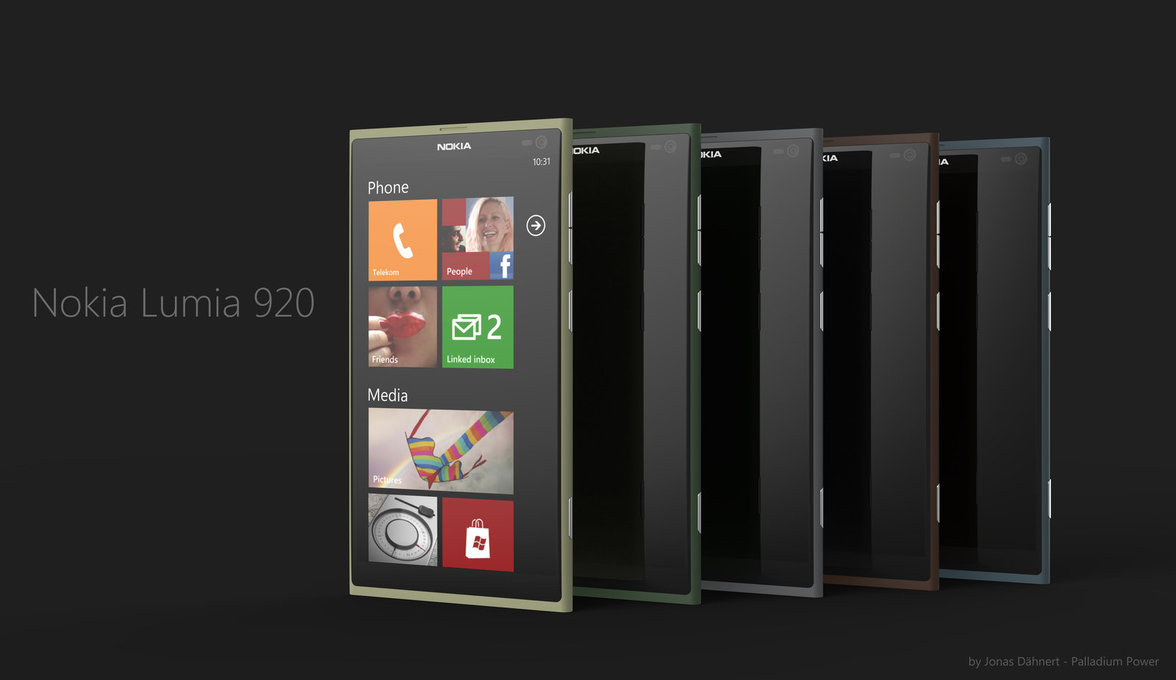
Pictures showing the new Nokia Windows Phone 8 mobile handsets have reportedly been leaked on Twitter.

Pictures, apparently showing the new Nokia Lumia 920 and 820 handsets, were released on Twitter on an account called @evleaks.

The pictures show the handsets, which look similar to Nokia’ earlier Lumia models, in a range of colours, including yellow and red.

The same account was used last week to leak images apparently showing new HTC devices, the Telegraph reports.

According to the paper, the larger of the two, the Lumia 920, has a 4.5-inch display and the smaller Lumia 820 has a 4.3-inch display but comes in more colours.

Nokia and Microsoft are holding a joint event in New York on Wednesday, at which they are expected to announce the new Windows Phone 8 handsets.


In a pre-iPhone age, mobile phones came in all shapes and sizes. Remember the clamshell, candy bar, swivel, backflip, slider, dual-slider, lipstick, and, of course, the taco?

Nowadays, most phones have a touch screen, rows of icons and are rectangular.

In short, they all look a lot like the iPhone.

Now, in the wake of the Apple Inc vs Samsung Electronics trial, where the U.S. firm won what the South Koreans scathingly called a 'monopoly over rectangles with rounded corners,' the fear is that an era of rapid and exciting innovation in mobile design is over.

The iPhone has won the day and all those whose handsets use Google's Android operating system, the argument goes, will either give up or tread carefully for fear of litigation.

But others argue the opposite.

Paul Pugh, creative vice-president at frog, a San Francisco-based design company owned by India's Aricent Group, believes companies may now unshackle their designers to come up with genre-busting form factors and user interfaces that breathe fresh life into the industry.

"We don't know yet how far the impacts are going to go from here," says Pugh.

"I do hope it's an inspiration moment for the Android platform and the manufacturers to put their bets on innovation ... to come with great user experience based on users' needs, and not stagnate based on the patents crippling them."

SMARTPAD

Frog knows how hard this is to bring to market. Take the SmartPad; a prototype Android phone the company unveiled last year that at first glance looked, in the words of one reviewer on the technology website Engadget, like 'yet another plain smartphone - dark, nondescript, and maybe a little like an iPhone 4 that's had its right-most extent sliced off'.

Flip open the two layers, however, and you had a phone with twice the normal screen size. "Suddenly it's a little tablet, two screens forming a 6-inch slate," the Engadget reviewer wrote.

The prototype, which belonged to Imerj, part of Singapore-listed contract manufacturer Flextronics International, intrigued: The Engadget article attracted more than 400 comments.

It wasn't a wholly new concept, but the design was impressive, including the software, which included apps that made the most of the extra screen.

Imerj promised a kit for software developers, and a team worked on a slew of apps that made use of the innovative dual screen.

They dreamed big: to take on Research in Motion's BlackBerry.

"We had an idea that the smartphone was going to be the primary computing platform for most people going forward," recalled Brett Faulk, then Imerj's vice president of marketing.

"However, it has two challenges: small screen and small keyboard. So the concept was to create a product that scales as my productivity needs increase."

After a few months, however, everything went quiet. Imerj's Twitter account went dead, as did its website. Both are now offline. Faulk and others left the company. Flextronics declined to comment, as did frog's Pugh.

A former member of the Imerj team said the project was deliberately aimed at a niche far from Apple's consumer-driven world, but that was part of the reason for its demise.

Building a device and the suite of office applications to go with it required at least five years gestation, an investment the parent company in the end couldn't make.

"We were very ahead," said the person, who was not authorized to speak about the project and declined to be identified. "We were very sad to see innovation being pushed aside."

LIMITED ROOM

At issue now is whether the Apple vs. Samsung verdict might upend such conservative calculations.

It may already be happening: The latest addition to Samsung's Galaxy range of devices - at the centre of the court case - is a camera with a display that looks, feels and acts like an Android smartphone, including WiFi and 3G connections.

And Samsung itself has a patent on a dual screen device, according to patent blog patentbolt.com, that looks a lot like the SmartPad.

But there are limits to what can be done with hardware.

"There was a lot of ingenuity about the mechanical configuration of designing buttons and cameras and exposing these particular features," said Horace Dediu, a former Nokia engineer who now runs a consultancy and influential blog called Asymco.

With the rise of the iPhone 'all that went away when you have a clean glass display with touch interface'.

The problem he says, is that the operating systems available to device makers - Android and, to a lesser extent, Microsoft's Windows Phone - are designed for that shape.

So, if there is going to be a change in what a phone looks like, Google needs to be the one to change.

"Theoretically, if Google thinks that this isn't a winning game for them they may go to the manufacturers and say OK, we're going to allow you to have mechanical differentiation," said Dediu.

Until that happens, manufacturers have limited room to move. They can toy with the specifications and proportions of the device - Samsung has had a surprise hit with its outsized Galaxy Note, the second version of which was unveiled on Thursday - or by tweaking the Android operating system itself.

Indeed, frog's most visible success in smartphone design has been a user interface that Sharp Corp recently launched for its Android phones in Japan.

Sharp, said Pugh, was looking to maintain its market lead as Japan shifts from older feature phones to smartphones, and gave frog a broad remit to come up with something to make their Android devices stand out.

The so-called 'Fresh UI' software adds an extra layer, or skin, to Google's basic operating system, which Pugh says improves access to the most used features on a device.

SKINS AND FORKS

Indeed, such skins are an increasingly popular way for handset makers to differentiate their devices from those of competitors.

Huawei on Thursday unveiled its own 'Emotion UI' skin which it said will give consumers 'one more reason to choose a Huawei smartphone over another brand's'.

It's not just for the big boys: Meizu, a small Chinese smartphone maker, has gained a cult following with its quirky customization of Android that once earned the ire of Steve Jobs, but is now fending off its own copycats.

But taking this route is not without its problems.

For one thing, skins are usually just that: a surface layer that users either love or hate, and which quickly peels away to the standard Android interface that is little different whether the device costs $500 or $50.

And while the goal is to differentiate, they can end up pushing the Android interface into more closely resembling Apple's own iOS.

Indeed, Apple presented slides at the trial alleging that Samsung's tweaks to the home screen on 13 devices made it mimic that of the iPhone. The jury agreed.

Some makers have already taken note. Meizu, the Chinese manufacturer, was happy when the home screen of one of its models was cited in court by Apple as an example of not infringing on its design patents, but the Chinese firm has nevertheless 'modified some aspects of our user experience' for future products, according to the Zhuhai-based company's product director Yang Yan.

Still, in the longer run innovation needs to go beyond mere tweaking, argues Brandon Edwards, Shanghai-based colleague of Pugh.

He believes more manufacturers will follow Amazon's path of taking Android in their own direction with the Kindle Fire, effectively parting company with Google.

Such so-called forks are likely to appeal to device makers beyond phones, Edwards says. Clients have been talking to frog about embedding technology into smart systems, cars and healthcare, and those devices could well be running Android.

DESIGN VALUE

Innovation in smartphones, meanwhile, is likely to move beyond form factor and apps to how they interact with their surroundings, says Pugh.

Expect to see smartphones better controlled by voice and gesture, moving beyond the restriction of the device's shape and touchscreen in the next year or so.

The most significant outcome of the Apple Samsung spat, however, may be that design is no longer merely an afterthought.

There may have been a lot of different shaped devices in the pre-iPhone world, but that doesn't mean they offered consumers a better user experience, says Pugh.

"All this confirms that there is a monetary value to design," he says.

"In the past, they were competing on speed and the technology base itself. Those things are now relatively normalized and design is really defining the device and the device experience."


Washington - Sept 2: Scientists have developed a new technology which they claim could make production of solar energy cheaper by 75 per cent, and thus speed-up its market adoption.

The RTI International solar cells are developed from solutions of semiconductor particles, known as colloidal quantum dots, and have a power conversion efficiency that is competitive to traditional cells at a fraction of the cost.

Solar energy has the potential to be a renewable, carbon-neutral source of electricity but the high cost of photovoltaic s, the devices that convert sunlight into electricity, has slowed widespread adoption of this resource.

Preliminary analysis of the material costs of the technology show that it can be produced for less than 20 dollars per square meter, 75 per cent less than traditional solar cells.

“Solar energy currently represents less than 1 per cent of the global energy supply, and substantial reductions in material and production costs of photovoltaic s are necessary to increase the use of solar power,” said Ethan Klem, research scientist at RTI and co-principal investigator of the project.

“This technology addresses each of the major cost drivers of photovoltaic s and could go a long way in helping achieve that goal,” Klem added.


“The efficiency of these devices is primarily limited by the amount of sunlight that is absorbed. There are many well-known techniques to enhance absorption, which suggests that the performance can increase substantially,” said Jay Lewis, a senior research scientist at RTI and the project’s other principal investigator.

Unlike traditional solar cells, these cells can be processed at room temperature, further reducing input energy requirements and cost.

In addition to being low-cost, the new cells have several other key benefits, including higher infrared sensitivity, which allows the cells to utilize more of the available solar spectrum for power generation.

RTI is an independent, non-profit institute that provides research, development, and technical services to government and commercial clients worldwide.

The technology was recently featured in a paper published in Applied Physics Letters.

Source: Business Line (The Hindu)


T-Mobile USA is reportedly launching its own Samsung Galaxy Note, amid rumors that Samsung will unveil a new version later this Fall.

T-Mobile USA could be the final destination of the Samsung Galaxy Note, reports leak today that the fourth largest wireless carrier in United States may bring the 5.3-inch Android smartphone to its market next month featuring its “4G” HSPA+ network.

According to Phone Arena, a leak this week revealed that a Samsung Galaxy Note sporting the T-Mobile USA is headed to the market by July 11, and coming with Qualcomm Snapdragon S4 CPU, Android Ice Cream Sandwich and 8-megapixel camera.

The new phone is expected to arrive before the rumored launch of the Samsung Galaxy Note 2, the next-gen Android-based Samsung “tab phone” that will reportedly ship with a better build quality, Exynos 4, the quad-core CPU similar to the Galaxy S3's, and other new features possibly including Super AMOLED Plus HD and a slightly larger display.


The Samsung Galaxy Note is one of the successful phones of Samsung last year, so it is safe to say that the company is bringing a new version before the end of 2012 to generate more revenue.

Samsung’s rival, Apple, is widely expected to unveil its new smartphone this fall, similar to the rumored release date of the Galaxy Note 2. According to Samsung, it does not comment on rumors but its Middle East Twitter account recently teased its followers that the Samsung Galaxy Note 2 exists.

The Samsung Galaxy Note is currently available via AT&T in United States, or unlocked for other countries with the original Exynos dual-core System-on-a-chip.


From James Bond’s larger than life gadgets of the 60s to the unmanned aircrafts of today, technology has advanced quite a lot. The involvement of technology in our daily lives has grown to such an extent that hardly a minute goes by in which we do not interact in any sort of way with a machine or gadget. Sales and usage of various gizmos like laptops, mobile devices and other communication devices has increased more than tenfold over the last five years. Recent survey shows that 80% of the tech loving younger generation check their mobile phones and face book accounts first thing in the morning after getting up! Technology is making our lives easier and more comfortable. On the other hand, it has also become a huge business for investors. Geeks flock to stores at every new release and sometimes wait up to 5 days outside shops to buy the latest phones or devices. The hype created for awaited gadgets and devices from major brands around the world, fueled by rumors and leaked photos, drive fanatics as well as casual buyers crazy with excitement and anticipation. 2011 has already seen some very big releases from Apple and Samsung. However, there are still some gadgets people are desperate to get their hands on. Following is the list of top 10 most awaited gadgets

10. Apple Ipod touch (5th generation)
Apple Ipod touch

After adding every possible feature in their Apple Ipod touch 4th generation including a touchscreen with a dazzling display, people thought that the Ipod had finally reached its pinnacle and could get no better. Well, they were wrong. Rumors have started circulating the web about a new soon to be released Ipod. A connection toggle switch has been added as evident by the leaked photos. This implies that the new Ipod will get 3G connectivity. This would mean unlimited text messaging at virtually no cost. The always connected status will be very useful for communication and entertainment alike. Another plus point is that this dual core A5 powered gadget can compete with the majority of smart phones in gaming as well as other apps. This would, in fact, make it a competitor of Iphone as well as Ipad. These new features are bound to push up the prices of the next Ipod Touch but that is something we will have to wait and see. It is currently at the 10th position of Top 10 most awaited gadgets.

9. Google Nexus 3
Google Nexus 3

This time around, Google has yet again caught the attention of masses with its upcoming release of Google Nexus 3. Sporting a massive 720p HD screen, this smart phone will be running on a newly launched Ice cream Sandwich OS. Specs also boast of 1.5GHz processor and 1 GB ram. A 5MP camera is expected which is powerful enough to support 1080 HD video recording. Other than this not much is know but special features like Holographic User Interface, Speech Recognition and Face Recognition are likely to make their debut with this phone marking a new era of how people interact with their mobile devices. Google Apps store is already offering a wide variety of apps and games to keep fans busy till the new Google Nexus comes out! A Nexus tablet is also being planned to be made available

8. Amazon Tablets and Amazon Kindle 4
 Amazon Tablets and Amazon Kindle 4

Amazon’s Kindle is already a world wide hit and can be safely stated as the best selling wireless e-book reader in the world. Over the years it has constantly developed and has evolved into a high tech gadget with over 900,000 online and offline books available. The variety and availability of content for the Kindle has made it a sure winner. However, the global scenario took a turn when Apple released its tablets which have taken over almost 90% of the tablet market. Giants like HP and Motorola came up with their own versions but failed to catch the public’s eye. Amazon strategically has held back release of its newer Kindle as well as a brand new line of tablets. Apart from the high resolution display which feels and looks like real, the newer kindle is also have said to have a virtually never ending battery and free 3G connectivity global. The much awaited Amazon Android tablets are also to be launched in 7″ and 10.2″ models. They are named Coyote and Hollywood for the time being

7. Nintendo Wii u
Nintendo Wii u

The gadget on the 7th spot of the Top 10 most awaited gadgets list is no longer a rumor now. Nintendo introduced its latest console to the world at the Electronics Expo 2011. It is now official and Nintendo has beaten all its contenders in releasing a newer generation console. An IBM multi core microprocessor enables this console to display 3D images at 1080 HD. The most notable addition is 6.2″ resistive touch screen built into the controller which allows playing on controllers instead of the TV screens! Compatibility with previous systems and accessories will make sure no die hard fan of this brand feels cheated by this new release. Camera and motion sensors have been added to the remote control to take the gaming experience to a higher level. Microphone and speaker system makes sure that there is no lag in coordination during both online and offline games. Gamers are squealing in delight at the very thought of owning this piece of highly sophisticated equipment but we will have to wait and see weather Nintendo does release Wii u on time or announces delays for which the company is quite notorious for.

6. Ps vita
Sony: Ps vita

With worldwide sales satisfactory for the Psp Go, one would think that Sony would sit idle and reap the harvests from its latest addition to its already expanding directory of portable gaming gadgets. However, we have come to know that Sony is planning to drive the last nail in the competitors’ coffin by releasing yet another mind blowing gadget called Ps Vita. This console supports Wifi and 3G, much like the Nintendo 3Ds, and makes connectivity child’s play. A 5″ OLED multitouch capacitive touchscreen is planned which also receives feedback from a rear sensor as well as head detection and tracker to make playing the Ps Vita an unforgettable experience! Front and rear cameras, coupled with gyroscope and accelometer, guarantee full body involvement from head to toe! Internal ram has skyrocketed to 512Mb, which is more than 16 times than the original Psp! Improved loading times and faster game play is to be expected thanks to a 4 core graphics processing unit. A strange coincidence is that the Ps Vita is rumored to also act as a controller for the forthcoming PS3 which is quite similar to what Nintendo Wii u is offering. Only time can tell how the Nintendo Corporation takes this. Backward compatibility is yet to be announced.

5. Ipad HD
Ipad HD

With more than 15 combinations to choose from, the current Ipad line up has already fulfilled all the requirements of users ranging from novice to professionals. Sufficient evidence has been gathered by various groups which proves that Apple Inc. still have another trick up their sleeves. The news of a new 9.7″ A5 powered Ipad called the Ipad HD has been making rounds on the internet for quite some time now. This has irked many users who rushed to the stores to buy the Ipad 2 a few moths ago. However, those who passed up on the Ipad 2 are now jumping with joy as they will make a better transition. Many claim that there was no major difference between the two Ipads except for Face time and was not a good buy. But this time around, apple has played their cards right by bringing Retina display over to Ipad HD. The stated 2048×1536 pixel display translates literally to four times the resolution from last time making it the third most wanted gadget. This feature sounds very fantastic but it bound to affect the overall battery timings as well as the introductory prices of these gadgets.

4. Motorola droid bionic 4G
Motorola droid bionic 4G

The Motorola Droid Bionic 4G is experiencing popularity and wide spread interest like no other Motorola phone as far back as one can remember. It is a 4.3″ dual core LTE 4G capable of blazing internet speeds and a respectable battery backup time. This Android smart phone runs on Gingerbread 2.3.4.and supports a docking system for connecting other Motorola gadgets. It has become so popular than people claim that this phone is really the first true competitor of Iphone on technical as well as popularity basis. An HD version will also be launched which is capable of 720p video recording courtesy of its 8 Mp camera.1 Gb makes sure there are no hold ups during video streaming or internet browsing. Video chat is one of the newest features being offered and Motorola Droid bionic 4G is fully capable of supporting it. It stands at number 4 on the top 10 most awaited gadgets. Google has recently purchased Motorola Corporation.

3. Windows 8 PCs
Windows 8 PCs

Microsoft and its Windows operating systems have always been in a love-hate relationship with its users. Although a sizable amount of users have migrated to Mac and other OS, Microsoft still dominates the market as well as the PCs of the majority of commercial and local setups. With the release of its latest operating system known as Windows 8 just around the corner, various screen shots and beta builds have constantly been leaked somehow to eager people waiting to get their hands on this latest milestone. Prominent features include a Ribbon interface with heavy use of Aero and brand new task manager features as well as other updated readers. Even though security was beefed up considerably after a few leaks, people continue to get info about the latest development of Windows 8. Many believe that this OS will be a failure but many are hopeful of a better and more stable system. The fact that Windows 8 can even be used as a portable OS installed on a USB has opened up countless new applications for this release. All aspects are optimized for touch as well as other input methods and all this is offered for the same machines which run Windows 7! How it actually turns out will be found out soon. Currently it is the third most awaited technology of 2011.

2. Xbox 720
Xbox 720

Microsoft is not intent on taking the news sitting down of major contenders on the verge of releasing newer consoles which can easily overshadow the Xbox 360 technically as well as in game play. However, Microsoft might be still sore from the $ 1 billion loss it incurred when it launched Xbox 360.Even with the Xbox 360 still going strong, the analysts started weighting all the options. Finally coming to a decision, Microsoft has decided to go public with the news of development of the Xbox 360′s successor, namely the Xbox 720.Landing on the second spot of the Top 10 most awaited gadgets list, it is sure to be loaded with features like high definition 3D features, multiple sensors for precision motion control, unrivaled graphics capability and an even faster game play. AI and physics of the next generation games under development for the Xbox 720 are said to be years ahead of others. Only a touchscreen controller seems to be lacking as all other competitors are sure to include this feature. Thanks to DirectX technology, Microsoft claims that normal game play will sport graphics and visuals no less than those seen in James Cameron’s epic “Avatar”! With such a huge claim of Xbox 720 capabilities, we are eagerly looking forward to its unveiling in the E3 2012.

1. Iphone 5
Iphone 5

The number 1 spot of the Top 10 upcoming gadgets goes to none other than the well loved and much prized Apple Iphone. With the 4th generation doing phenomenal business everywhere, a new Iphone story has emerged. The reason Iphone is the most awaited upcoming gadget is that so little is known about it. With Retina Display and Face time as regular features, it is bound to also have PSD, Apples latest patented technology which is basically an anti-fingerprint technology. A projector integration may be in the making too. As regarding the shape, pictures seem to show a much thinner and partly teardrop shaped phone with a wider home button than the previous versions. Apple has really kept the lid on this one as not even the carriers have been notified of any development regarding these devices. Lastly, it is being claimed that this 4″ gadget will come out in black and white colors. Until apple officially makes any announcement, we will have to make do with all we can get our hands on and wait of the day when we can at least preorder our own Iphone 5!
“Ice Cream Sandwich” Theme


Android 4.0 Ice Cream Sandwich is an amazing operating system which is yet to release but if you wanna grab that awesome user interface for that version on your current operating system than we have a solution for that thing.

Below is the preview of that theme you can check it out and you can download this from the Android Market the link for the download is below :

“Ice Cream Sandwich” Theme

“Ice Cream Sandwich” Theme

“Ice Cream Sandwich” Theme

“Ice Cream Sandwich” Theme

“Ice Cream Sandwich” Theme


Features of “Ice Cream Sandwich" Theme :

  •     New graphics for dock bar (ADW & Go)
  •     Themed search widget (ADW only)
  •     Honeycomb system icons! (placeholder)
  •     Wallpaper pack included
  •     ADW Theme support
  •     Launcher Pro theme support (limited to icons)
  •     Go Launcher EX theme support
  •     Support for Desktop Visualizer
  •     Support for Folder Organizer


At BlackBerry DevCon Americas 2011, Research In Motion (RIM) (NASDAQ: RIMM; TSX: RIM) today unveiled BlackBerry BBX, its next generation mobile platform that takes the best of the BlackBerry® platform and the best of the QNX® platform to connect people, devices, content and services.

In addition, RIM announced a series of developer tool updates, including WebWorks for BlackBerry smartphones and tablets, the Native SDK for the BlackBerry PlayBook and a developer beta of BlackBerry PlayBook OS 2.0 with support for running Android applications. RIM also provided direction for developers on how to best develop and monetize their BlackBerry applications for today and for the future.

"With nearly 5 million BlackBerry apps downloaded daily, our customers have made BlackBerry one of the most profitable platforms for developers," said Mike Lazaridis, President and Co-CEO at RIM. "At DevCon today, we're giving developers the tools they need to build richer applications and we’re providing direction on how to best develop their smartphone and tablet apps as the BlackBerry and QNX platforms converge into our next generation BBX platform."

BlackBerry BBX

BBX is the next generation platform for BlackBerry smartphones and tablets. It combines the best of BlackBerry and the best of QNX and is designed from the ground up to enable the powerful real-time mobile experiences that distinguish BlackBerry products and services.

The BBX platform will include BBX-OS, and will support BlackBerry cloud services and development environments for both HTML5 and native developers. BBX will also support applications developed using any of the tools available today for the BlackBerry PlayBook – including Native SDK, Adobe AIR/Flash and WebWorks/HTML5, as well as the BlackBerry Runtime for Android Apps – on future BBX-based tablets and smartphones.

BBX will also include the new BlackBerry Cascades UI Framework for advanced graphics (shown for the first time today), and bring “Super App" capabilities to enable many advanced capabilities including deep integration between apps, always-on Push services, the BBM™ Social Platform, and much more.

BlackBerry WebWorks

Developers who want to support both existing smartphones (running BlackBerry 6 and BlackBerry 7 OS) and BlackBerry PlayBook tablets can monetize apps on both platforms today with BlackBerry WebWorks, which supports apps built on HTML5, CSS and JavaScript. The latest release, BlackBerry WebWorks SDK 2.2 (supporting both smartphones and tablets), is now available and includes updates for the new PlayBook OS SDK, PlayBook Simulator and more.

The BlackBerry WebWorks APIs are supported by the Ripple Emulator, a standalone, high-fidelity browser-like emulation tool that allows developers to test and debug their applications on multiple platforms and devices without having to compile or launch simulators. Starting today the Ripple Emulator is available in beta and can also be downloaded from RIM’s WebWorks Developer site at:http://developer.blackberry.com/html5

Native SDK - Content Rich, Fast and Smooth Running Applications
RIM also announced today the immediate availability of the Native SDK for the BlackBerry PlayBook (1.0 gold release). The Native SDK allows developers to build high-performance, multi-threaded, native C/C++ applications and enables developers to create advanced 2D and 3D games and other apps with access to OpenGL ES 2.0 and Open AL, as well as device specific APIs. Applications developed with the Native SDK will run today on the BlackBerry PlayBook and will be forwardly compatible on BBX-based tablets and smartphones.

The Native SDK includes support for C/C++ POSIX library and compliance, device events like gesture swipes and touch screen inputs, access to code management systems using industry standard Eclipse CDT (C/C++ Development Tools) and advanced debug and analysis tools. QNX Momentics Tool Suite, an Eclipse-based integrated development environment, is included. It provides memory profiling, application debugging, and memory usage statistics to help developers debug sophisticated programs, including hardware accelerated OpenGL applications.

The Native SDK makes the development and porting of game applications to the BlackBerry PlayBook an extremely attractive proposition for developers. Well known game publishers, developers and major game engine companies have already started to bring their game titles and applications to the platform.

Scoreloop, the largest and fastest growing cross-platform social gaming ecosystem on mobile, is now available in beta for the Native SDK through BlackBerry® Beta Zone. The Scoreloop SDK provides everything a developer needs to easily integrate social capabilities into their native PlayBook applications and includes support for Leaderboards, Game Challenges, Awards & Achievements, and Player Profiles. Scoreloop’s fully customizable and cross-platform technology empowers developers to add as many or as few features as they want, from a simple leader-board to more extensive player achievements. It makes mobile games more social and profitable.

BlackBerry Cascades - Create Visually Stunning Interfaces

RIM today showcased BlackBerry Cascades, a rich user interface framework coming to a future release of the Native SDK. Cascades unleashes a new breed of design centric mobile applications and provides developers with an exceptional feature set for creating visually stunning interfaces with custom layouts, animations, effects and 3D graphics. These features, combined with a strong set of built-in core user interface components, will make it easy to build beautiful native applications with innovative user interfaces for the current BlackBerryPlayBook and future BBX-based tablets and smartphones. Cascades is scheduled to be made available in beta later this fall.

Adobe AIR 3.0 Support

Adobe Flash enables developers to produce visually stunning, highly functional applications for the BlackBerry PlayBook that can integrate with the underlying OS and will be supported on future BBX-based tablets and smartphones.

The BlackBerry PlayBook now supports the recently announced Adobe AIR 3.0 runtime. Among the supported features are Encrypted Local Store that gives developers the ability to use the Advanced Encryption Standard (AES) to encrypt and securely store sensitive information on the device, as well as store passwords, keys or credit card information safely within the app; StageText that allows developers to take advantage of native text controls and the native interaction behaviors of those controls; Multitouch and Gestures built into applications to provide great usability; and more.

PlayBook OS 2.0 – Developer Beta

RIM introduced today the Developer Beta version of the BlackBerry PlayBook OS 2.0. The Developer Beta includes the BlackBerry Runtime for Android Apps and the BlackBerry Plug-In for Android Development Tools (ADT), allowing developers to quickly and easily bring Android applications to BlackBerry PlayBook tablets.

The BlackBerry Plug-In for ADT (an Eclipse plug-in) extends a developer's existing Eclipse Android development environment to support the PlayBook, and includes the BlackBerry PlayBook Simulator for developers to test and debug their apps before submitting them toBlackBerry App World™. Developers can also test and debug their apps on a PlayBook running the BlackBerry PlayBook OS 2.0 - Developer Beta.

Android developers can also repackage Android apps for the BlackBerry PlayBook online by using the BlackBerry Packager for Android Apps. The web tool guides developers through a step-by-step process, allowing them to test their apps for compatibility with the PlayBook, and repackage and sign their apps for submission to BlackBerry App World, all without downloading any tools.

BlackBerry Runtime for Android Apps and the associated tools allow Android developers to easily expand their market to includeBlackBerry PlayBook users, and hence increase their apps’ market potential.

The BlackBerry PlayBook OS 2.0 - Developer Beta also supports Adobe Air 3.0 and Adobe Flash 11, as well as WebGL, a new web technology that brings hardware-accelerated 3D graphics to the browser without installing additional software. Developers will be able to generate rich, interactive 3D graphics within their BlackBerry WebWorks application.

For more information about the BlackBerry PlayBook OS 2.0 - Developer Beta and BlackBerry Runtime for Android Apps and associated tools, visit For more information about the BlackBerry PlayBook OS 2.0 - Developer Beta and BlackBerry Runtime for

Android Apps and associated tools, visit: https://bdsc.webapps.blackberry.com/android/bpaa/
Increased Developer Productivity with Open Source Libraries on the BlackBerry

PlayBook OS

RIM also announced the BlackBerry Open Source Initiative to port popular Open Source libraries to the BlackBerry PlayBook platform. Libraries already available include physics engines like Bullet Physics and Box2DX, scripting languages like Lua, multimedia libraries like OpenAL and SDL, gaming frameworks like Cocos2DX and general-purpose libraries like Boost and Qt. Also available under an Open Source license are a range of code samples that developers can use to get started quickly, as well as GamePlay, a new 3D native gaming framework.

RIM will continue to expand its involvement in the Open Source community to help increase developer productivity on the BlackBerryplatforms. For more details on RIM’s Open Source activities, visit http://blackberry.github.com.
Jaspersoft, maker of the world's most widely used business intelligence (BI) software, today announced it is joining with IBM (NYSE:IBM) in the Big Data space. Jaspersoft will work with IBM to deliver a solution that combines IBM's enterprise-class, Hadoop-based product, InfoSphere BigInsights, with Jaspersoft's full BI suite to provide a complete reporting and management solution to meet customers' significant-volume data needs.


With the increasing amount of data in companies today, there is an opportunity to extract high value from it inside and outside of the organization. In fact, Forrester Research estimates that firms currently utilize less than 5 percent of their available data; Big Data enables firms to affordably access the other 95 percent. While these data sets are characterized by their very large volume, velocity, and variety of information; using the right tools, they can yield new insights for greater business value. Through its new partnership around Big Data, Jaspersoft is integrating and licensing IBM InfoSphere BigInsights through an Application Specific Licensing Agreement. Jaspersoft for InfoSphere BigInsights combines the power of IBM's analytics platform to manage, analyze and provide deep insight into Big Data with Jaspersoft's capability to extract key information using flexible and easy-to-use reporting, dashboard and analytics views in one integrated solution, enabling competitive advantage.

Jaspersoft provides a truly native reporting solution that can connect directly to IBM InfoSphere BigInsights through HBase as well as Hive. This means that with Jaspersoft, businesses can perform interactive ad hoc reporting and analysis directly on data stored in Hadoop without having to load this data into another database as is the case with other BI vendors. Fully integrated with IBM's InfoSphere BigInsights platform, Jaspersoft's BI suite provides BigInsights users with plug-and-play access to their organization's data and the ability to combine this information with a wide range of other internal and external sources, including web and SaaS-based data sources.

Karl Van den Bergh, Vice President of Product and Alliances at Jaspersoft said, "We're pleased to be partnering with IBM to deliver an industry-leading solution that combines cost-effective and flexible business intelligence with Internet-scale data management capabilities. Together, we can meet the Big Data Analytics needs of any size organization."

Bruce Weed, Program Director, Big Data Business Development at IBM said, "Jaspersoft provides a powerful and flexible reporting and analysis solution, and is a key part of our rich ecosystem in the Big Data space. In addition, Jaspersoft's community of a quarter million members will help us further address and solve problems within the Big Data space."

Key features of the solution:
  • The full Jaspersoft BI Suite including ETL, pixel-perfect and ad hoc reporting, dashboards, and analysis with native connectors to IBM InfoSphere BigInsights through HBase and Hive
  • Job and workflow management, provisioning and advanced security, large-scale indexing and text analysis through IBM InfoSphere BigInsights
  • Available as a free/community version and a commercial version with more advanced features
For more information on the Jaspersoft and IBM Big Data Analytics solution, listen to the replay of the joint IBM and Jaspersoft webinar held on October 12.

About Jaspersoft

Jaspersoft provides the most flexible, cost effective and widely deployed business intelligence suite in the world, enabling better decision-making through highly interactive web-based reports, dashboards and analysis. Leveraging a commercial open source business model, Jaspersoft provides end-to-end BI capabilities at a fraction of the cost of other vendors. The BI suite includes pixel-perfect enterprise reporting, ad hoc query, dashboards, OLAP and in-memory analysis, and data integration. Jaspersoft is the only BI vendor that enables companies to adapt to the new, virtualized world by providing a complete spectrum of on-premise, multi-tenant SaaS and cloud-based deployment options for both embedded and standalone business intelligence. Unlike traditional BI vendors, Jaspersoft is built on a modern, lightweight, standards-based architecture and offers greater vendor independence thanks to its open source codebase. Unlike niche BI vendors, Jaspersoft represents a safe choice with tens of thousands of production deployments across a wide range of industries.

Jaspersoft's open source business intelligence software has nearly 14 million product downloads worldwide, 175,000 production deployments and over 14,000 commercial customers in 100 countries. Its BI suite is advanced regularly by a development community of nearly 240,000 registered members. For more information visit: http://www.jaspersoft.com and http://www.jasperforge.org.
Copyright © 2012-19 Today's Technology Information.
Terms of Use | Disclaimer | Privacy Policy | Copyright Notice | Contact Us