There are plenty of tools for converting YouTube videos, and VLC Media Player is one of them. VLC Media Player, the world’s favorite video player that supports nearly every video format, can also play YouTube videos on your desktop without requiring the web browser or the Adobe Flash player.  With its latest update, though, VLC can also simply play YouTube videos when you paste in a YouTube URL.

It wasn't promoted heavily, if at all, at the time of the 1.1 release. To get started, open the VLC player, click on Media button and choose "Open Network Stream" ( or simly press Ctrl+N ) to open the Network URL dialog and paste any YouTube video URL in the input box(just the URL and first parameter, like http://www.youtube.com/watch?v=lmiKebc3l6w).


The Benefits of Watching YouTube Videos with VLC

The streaming videos will play inside VLC Media Player just like any other local video file while offering some additional benefits not available inside the standard YouTube player.
For instance:

  •     You can choose Video -> Always on Top inside VLC and the YouTube video window will stick to the foreground while you work on other tasks.
  •     Press the Loop button in the player controls and the YouTube video will play non-stop in a loop (also possible with Chrome add-ons).
  •     You can change the Playback speed of the YouTube video and make it run slower or faster than the normal speed.
  •     Use the Tools -> Take Snapshot option to capture a screenshot image of any frame or scene in the YouTube video.
  •     Watch the YouTube videos without the ads. I played a couple of movies and music videos inside VLC and none of them carried any pre-roll ads.

Play YouTube Playlists inside VLC

VLC, by default, only supports single YouTube URLs but it also possible to import an entire YouTube Playlist into VLC and watch all the videos in sequence.

Here’s the trick. Right-click and save this file to your desktop. Now open the VLC installation folder (%ProgramFiles%\VideoLAN\VLC) and move the .lua file into the exiting /lua/playlist folder.

Restart the VLC Media Player and choose Media -> Open Network Stream. Now paste the URL of any public YouTube Playlist here and the enjoy the videos.

In addition to YouTube, VLC Player can also play DailyMotion videos outside the browser. It is supposed to work with Vimeo videos as well but that is currently broken possibly due to a change in the URL structure at Vimeo’s end.

Twit Wipe


Twitter is a social networking micro blogging community portal, where people post about their day to day things that had happened to them or which they have grabbed from other fellow twitters. Advantageously from years its running effectively and people might have tweeted thousands of quotes, but what if you want to delete all the tweets from your account. For deleting tweets, using twitter you have the option to delete one by one and but that will surely take some months to clean up the whole crap.

For this thing we have an amazing online tool called TwitWipe that claims to make your process a lot much easier and faster. With one authority process done your tweets will get disappeared like hell. Here I have given below steps on how you can start this process with your own online account.

Step by Step Process:

1) First step to visit TwitWipe.com and Sign In with Twitter account.

2) After sing in, this App just Authorize your login because without this thing it might not be able to clean up the stuff.

Authorization Twitter Account

3) After authorization, just visit your account and click on TwitWipe this Account, and so you have to agree to some things telling your that you are going to delete all your tweets! so check that out and confirm.

4) Now just leave it till it completes the whole deleting process.

5) It might take some time depending on users using their services and load on their server, but it will end soon.
Apple iPhone 5


Apple’s making commercials again, but this time they’re really really good. If you’re not sold on picking up an iPhone 5 yet, these ads spotted by Macstories will probably get you stoked.

Each ad has a theme and a one word name. The ads show off different capabilities of the iPhone 5, and I must say that they’re extremely compelling. Have a look:

Orchestra:

Turkey:

Physics:

Thumb:

Ear:

Cheese:

My favorite one definitely has to be “Orchestra” as it shows off Apple’s genius marketing and ability to explain the complex in a simple way. Well done, Apple.

Also, I’m not surprised that “Maps” wasn’t released as an ad.

IT'S the new frontier of medical technology.
The new iPhone app allows a user to prick their finger and test their blood. Picture: Stephen Cooper


A snazzy gadget that hooks up to the iPhone to read diabetics' blood glucose levels.

Pharmaceutical giant Sanofi will today release the iBGStar to be sold in pharmacists across the country for $99.

The technology plugs into the base of the iPhone or iPod Touch. Users prick their finger with a lancet and then press the blood sample to the meter.

The blood glucose result will appear on the mobile screen within six seconds and can be emailed to relatives or medicos instantly.

NSW mother Annemarie Branson trialed the technology with her children Tim, 15 and Isabella, 12 _ both suffer from Type 1 diabetes.

Ms Branson said she receives email updates from her children with their latest blood glucose level.
Full Digital Access - $5 for first 28 days
Diabetes test on iPhone

The new iPhone app allows a user to prick their finger and test their blood.

"It's reassuring for me the kids can take a screenshot of their results, which includes details of their recent activity and how they are feeling and send it to me," Ms Branson said.

Australian Medical Association president Dr Steve Hambleton said he was "really excited" by emerging medical gadgets.

"I think it is great innovation and there is all sorts of opportunities. Anything that can help diabetics improve their management is fantastic," he said.

"We have to start utilising this incredibly powerful computer we carry in our pockets."

But, he said, it is important regulations keep up with innovation.

"We need to start getting an approval process up that says this is a quality product that is reliable. I think the developments are going faster than the regulations at the moment. There will have to be some way of accrediting these things to make sure we all have confidence they will give us accurate information."

Annemarie Branson with her two diabetic children Isabella-Rose, 12 and Tim, 15 using new I Phone App to test their blood glucose levels. Picture: Stephen Cooper Source: News Limited

Sydney GP Dr Brian Morton said he was concerned about the accuracy of these new technologies.

"This sort of technology makes it easier for diabetics to manage their blood sugar level, so on the whole is a good thing," he said.

"But, we always need to be careful of the accuracy of it. I think people who get it will need to correlate their results with accepted testing, like their home monitors."

NEW YORK — Think of it as the opening act at a concert: Nokia, Motorola and Amazon are unveiling new mobile devices this week before attention turns to a new iPhone and possibly a smaller iPad from Apple.

Makers of consumer electronics are refreshing their products for the holiday shopping season. Apple's rivals are hoping that a head start on the buzz will translate into stronger sales. Nokia and Microsoft, in particular, are trying to generate interest in a new Windows operating system out next month.

Here's a look at what to expect:

NEW iPHONE: Apple Inc. has been coming out with a new iPhone each year, and that's likely to continue. The new model is expected to work with fourth-generation, or 4G, cellular networks that phone companies have been building. A bigger iPhone screen is also possible. Apple said Tuesday that it will host an event in San Francisco next Wednesday. The topic wasn't disclosed, but the email invitation contains a shadow in the shape of a “5” — a sign that the iPhone 5 is coming.

Apple CEO Tim Cook walks on stage during the Apple Developers Conference in June in San Francisco. Makers of consumer electronics are refreshing their products for the holiday shopping season.

SMALLER iPAD: Many companies have tried to come out with iPad alternatives, but the ones that have had moderate success have tended to be those with smaller, 7-inch screens and lower price tags. There's a belief that Apple will come out with mini iPad this fall to compete.

REKINDLING THE FIRE: Amazon.com Inc.'s 7-inch Kindle Fire is one of the smaller tablets with decent sales. Last week, Amazon said it has sold out of the Kindle Fire, a sign that it had retooled its production lines for a successor. Amazon has a major event planned Thursday in Santa Monica. Amazon hasn't said anything about what it will say, but it's expected to announce a new Kindle Fire and possibly other e-readers, too. Barnes and Noble Inc., which makes the 7-inch Nook Tablet, may have an update this fall as well.

MOTOROLA'S RETURN: Motorola Mobility has scheduled an event today in New York. It will be the first Motorola product announcement since Google bought the company for $12.4 billion in May. Google, meanwhile, continues to sell a 7-inch Android tablet, the Nexus 7, made in partnership with AsusTek Computer Inc.

CALLING ON WINDOWS: Microsoft Corp. will release a new version of the Windows operating system on Oct. 26, one that's designed to work on both traditional computers and tablet devices. A new version of the Windows Phone system is coming out, too. Nokia and Microsoft have jointly scheduled an announcement today in New York. It's likely on new Windows phones under Nokia's Lumia brand.

SURFACE: Microsoft plans its own tablet computer, too. The Surface tablet will come in two versions, both with 10.6-inch screens, slightly larger than the iPad's. The Surface will go on sale on Oct. 26.

NEW BLACKBERRYS: In June, Research In Motion Ltd. pushed the release of BlackBerry 10 devices into early next year, saying it wasn't ready.
Automatic plate scanners being tried out by Quebec Police provide more information quickly.


The stolen car that led Gatineau police on a wild chase Aug. 14 wasn't spotted by a flesh-and-blood police officer but an all-seeing electronic eye that can scan dozens of licence plates in an instant.

The new technology could be a threat to individual privacy, says lawyer and privacy expert Jonathan Dawe.

"On the one hand, your licence plate is something you display in public, it's a public record," he said. "But there is a real privacy concern that emerges when there's technology that can collect people's data in public in a way that would be difficult for individual officers to do."

The licence plate detection systems have been in place for almost two years, a Gatineau police spokesman said.

Cameras affixed to four Gatineau police vehicles, both marked and unmarked, scan plates of passing cars and feed the data to a com-puter connected to the main police database that cross-references all known information about the car and feeds it back to the officer.

The Ontario Provincial Police rolled out a similar system in 2009. Through an information-sharing agreement with the province, the OPP obtain a list of what they call licence plates in poor standing - plates with expired tags, cancelled licences, or from stolen vehicles.

For both police departments, if the scan turns up any kind of violation the officer is immediately notified.

"As soon as we read a plate, you can see the result in the car," said Gatineau police Const. Pierre Lanthier.

Police say the systems are a boon for traffic enforcement and an important tool for keeping streets safe from unsafe drivers.

"For us, it's just another investigative tool," said OPP Sgt. Kristine Rae. "We still have to do the legwork, we still have to verify what the computer spits out. It's just an indicator."

Only four cruisers are equipped with the systems in Ontario, Rae said, and they rotate through different districts. The systems' database was originally planned to link up to the police information on outstanding warrants and criminal charges, but Rae was unsure if that connection had been completed.

Tom Stamatakis, president of the Canadian Police Association, said the automated licence plate scanners are not an exercise of any new police powers.

"It's just a more efficient way to do what the police have always done," he said. "The only difference is the volume of information. There's no difference in terms of what information police officers are accessing. From a policing perspective, it's a really efficient way to identify people who might be dangerous to others on the road."

It is unclear what happens to the data collected by police, including location and time of day, about vehicles that aren't flagged by the system.

Lanthier admitted that data about every car scanned by the Gatineau system, including offenders and nonoffenders, is kept in a police database for a time, but any further information about the system would have to be obtained through a provincial access to information request.

But Stamatakis said keeping the information around makes little sense for policing, and the reams of data would quickly fill whatever storage police had chosen.

"I can't think of what we'd use that for," he said. "From a policing perspective, there's no utility to retaining data where there's no issue."

Dawe said licence plate recognition systems are one part of the evolving conversation and legal framework surrounding privacy in the digital age. "They definitely should be a part of the conversation about the limits of privacy," he said. "Technology has made it far easier to collect this information. The cost of electronic storage is plummeting and it's made it easier to keep giant databases that make this kind of information easily accessible."

Nader Hasan, a criminal defence and constitutional lawyer, said he believes the public should be aware of the creeping expansion of police surveillance powers. The legal definition of privacy is based on when people feel they should have privacy. Hasan said that as technology advances, people's reasonable expectations - and by extension their legal right to privacy - can change.

"Technology has the potential to eviscerate privacy," he said. "The longer a technology is in place, the narrower the scope of your privacy rights. Even something that seems like an incremental diminution of privacy rights is something that must be approached with the utmost concern."

An Ottawa police spokesman said the department does not use licence plate recognition systems, but it is under consideration.


Motorola is dead-set on showing off some new hardware at its New York press event next week, but could it have more up its sleeve than we all expected?

A handful of leaks (accidental and otherwise) have already outed the Droid RAZR M and the long-awaited RAZR HD, but Bloomberg seems to have confirmed the existence of another new Motorola handset whose description doesn’t seem to match up with anything I’ve seen recently.

This device’s claim to fame is its use of an edge-to-edge display, which neither of the two previously-spotted devices seems to sport.

Arguably the RAZR M (seen above) comes the closest to that description — its 4.3-inch qHD Super AMOLED Advanced panel is bound only by a small bezel — but Bloomberg’s Jon Ehrlichman was quick to note in a tweet prior to the article being published that the device was “sans bezel”.

The report goes on to mention that the device in question was compatible with LTE networks, though that’s hardly a surprise considering Motorola’s track record.

So, obviously, the big question is “Is this thing legit?” For what it’s worth, I think it’s real, but I’m not so sure about some of the details that Bloomberg cites.

For one, Bloomberg’s source has pegged this handset as debuting at next week’s (9/5) Motorola event. Possible, sure, but given the device’s crazy display, it seems like the sort of device that would take center-stage at a Motorola/Intel event on September 18.
Samsung always feels 'heightened sense of crisis' so that it always looks ahead even when it's doing well - Agencies


In his 1997 book, Samsung chairman Lee Kun-hee wrote that a successful company needs a 'heightened sense of crisis', so that it always looks ahead even when it's doing well, and needs to be able to respond to change.

It's a credo that has driven Samsung Electronics to become the world's biggest technology firm by revenue - it sells more televisions, smartphones and memory chips than anyone else - and makes the group a must-visit case study for a stream of Chinese firms seeking to tap the secrets of Korean success.

But, in the wake of last month's damaging U.S. patent ruling, which Samsung has said it will appeal - the Korean group was fined more than $1 billion after a jury found it had copied key features of Apple Inc's iPhone - the group's top-down command structure and decision-making process are blamed for stifling creativity.

What's been good for getting things done quickly, such as making bold decisions on big investments in chips and display screens, may not now best suit a company that needs to shift from being a 'fast follower' - quick to match others' products - to an innovator.

Within Samsung, where some designers feel overlooked and undermined, there are calls for a change of tack.

The 'constant crisis' has worked well, helping Samsung overtake Japanese technology brands Sony, Sharp and Panasonic in chips, TVs and displays, end Nokia's decade-long supremacy in handsets and overtake Apple in smartphones.

But that has come with a big reputational hit - that Samsung makes knock-off products.

MOVING HEAVEN AND EARTH

"It's a crisis of design," JK Shin, head of Samsung's mobile division told staff in February 2010 as Samsung worked on its first Galaxy phone in a panicky response to the iPhone's smash-hit debut, according to an internal memo filed to a U.S. court as part of Apple's lawsuit.

"Influential figures outside the company come across the iPhone, and they point out that 'Samsung is dozing off.'

"All this time, we have been paying all our attention to Nokia, and concentrated our efforts on things like 'folder', 'bar', 'slide,' yet when our UX (user experience) is compared to the unexpected competitor Apple's iPhone, the difference is truly that of Heaven and Earth."

The sense of crisis and urgency to catch Apple drove Samsung designers and engineers to opt for a concept that best matched the look and feel of the iPhone, according to one Samsung designer, who isn't authorized to talk to the media and didn't want to be identified.

"Designers have lots of unique and creative ideas, but these have to be loved by the top decision-makers. The problem was, because they were so fascinated by the Apple design, these ideas weren't really satisfactory to please the top level," said the designer.

"I think elsewhere top managers respect their chief designer's decision, but at Samsung, they overrule designers and have the final say about what design we go with. That limits our capability. To be better than a good fast follower, Samsung needs a more horizontal culture and to empower designers."

A Samsung executive, who didn't want to be named, countered that the group had started out with little innovation - it struggled even to make simple black and white TVs - but now drives new ideas internally through incentives and bonuses, with Lee himself very interested in new technology and design.

MORE WOW


One recent example of that top-heavy command structure came less than a fortnight before the launch of Samsung's Galaxy S III smartphone in May, when vice-chairman Choi Gee-sung ordered half a million blue phone cases to be thrown away as the design, with thin, silver stripes, was unsatisfactory, according to a person familiar with the matter.

After a number of tweaks, Choi approved the final design on a Sunday just 10 days before launch, triggering an initial supply bottleneck and delaying shipments of some 2 million units, according to some analysts.

Similarly, when Choi visited Samsung's U.S. telecoms operation a year ago, internal documents filed to the court during the U.S. patent battle with Apple showed managers there were worried about a lack of initiatives to impress him.

"Overall plan is OK, but we are lacking a WOW idea to share with GS (Choi). Generally, lacking confidence in our plan to 'beat Apple'."

The react-fast philosophy is a far cry from how Apple worked. Christopher Stringer, a 17-year Apple design veteran, told the U.S. court that around 16 'maniacal' individuals from all over the world used to brainstorm around a kitchen table to come up with the company's mobile products.

By contrast, Samsung's design sanctum looks much like any other Samsung department, a Dilbert sprawl of desks and cubicles with framed aphorisms from the founding family on the walls: 'Be with Customers', 'Create Products that Contribute to Humanity' and 'Challenge the World, Create the Future'.

"It's pretty much a top-down, hierarchical culture that doesn't do any good in inspiring creativity," the designer added.

"I don't think it's a unique Samsung problem, but one that plagues South Korean society as a whole. Samsung is making efforts to change it, but it's still very much top-down."

"Probably what we need now is the creative environment that Silicon Valley boasts."

'SAMSUNG MEN'

Living up to its reputation for moving swiftly and nimbly in an increasingly competitive market, Samsung's mobile product life cycle is getting shorter - it introduces a new product around every six months.

In a surprise last Wednesday, Samsung unveiled a smartphone using Microsoft's latest mobile software, rushing the announcement just days before the highly anticipated launch of Nokia's version.

"Regardless of any hindrance, Samsung will continue to provide outstanding, innovating and unique products that stand out in the industry," Samsung's mobile chief Shin said at Europe's biggest electronics show in Berlin.

Shin has also praised the company's 'diligent and exemplary' elite workforce, the so-called 'Samsung men' trained in the 1990s with a textbook called 'New Samsung Management' that summarised chairman Lee's remarks and his sense of crisis.

Lee, who took over as chairman from his father and group founder in 1987, stepped down in 2008 after he was convicted of embezzlement and tax evasion, but returned within two years following a presidential pardon. He marked his return with his familiar refrain.

"We're in a real crisis. Top global companies are reeling and (I'm) not sure what will happen to Samsung. Most products and businesses that represent Samsung today will be gone in 10 years time. We should start again. There's no time to waste."

That summer, Samsung saw its telecoms profit halved as Apple captured consumers' hearts and wallets.

But it swiftly rebounded with its Galaxy line-up and has posted record profits each year since. Annual profit this year is likely to top $22 billion, up 45 per cent from 2010.

But the crisis culture is wearing thin for some.

"It does keep people agile and alert, but people joke that once you work more than five years at Samsung you've probably heard it more than enough and think it more of a repetitive cycle," said a Samsung chip developer, who wasn't authorised to talk publicly about the company.

"You just get used to these things." Even 70-year-old billionaire Lee may be mellowing.

Briefed after the bruising Apple defeat, Lee said only: "Deal with it well," according to a person familiar with the matter.
'Ninja style' plane that spins 90 degrees in air for supersonic flight gets NASA aid for development. (Photo: Gecheng Zha, Florida State University)


A new type of 'Ninja style' aircraft that spins 90 degrees in air for efficient faster-than-sound flight and 'virtually zero sonic boom' has been granted USD 100,000 by NASA for further development.

The plane is created in a way that will allow it to take off from the ground, and then turn on its side once it reaches supersonic atmospheric levels so that it can continue its flight into the uppermost parts of space.

The plane looks something like a four-cornered ninja throwing star with two sides that are extended out while the other two sides are far shorter, the Daily Mail reported.

As the plane takes off from the ground, it has to have the longer wings on either side, making the plane appear shorter in length and longer in width, according to 'Engadget'.

Normal commercial airplanes have such significant wings because they need to use that wingspan to gain enough momentum to get off of the ground.

While the large wingspan is needed to take off, it creates too much drag for the plane when it reaches supersonic speeds.

As a result, once it reaches the supersonic atmosphere, the plane will then rotate 90 degrees so that it is longer and thinner than when it took off.

The new technology pioneered by Dr Gecheng Zha of University of Miami can overcome these problems.

The school has an animated video of the plane in flight- equipped with the University's logo on the wings- to give a fuller idea of the shift and at what point that would happen during the flight.

'Engadget' reports that the recently-approved award from NASA will allow the Professor and his aides to continue their research and refine it using simulations and wind tunnel testing.

While the funding will give the research an obvious boost, it is still expected to take decades before any form of said plane becomes a reality.


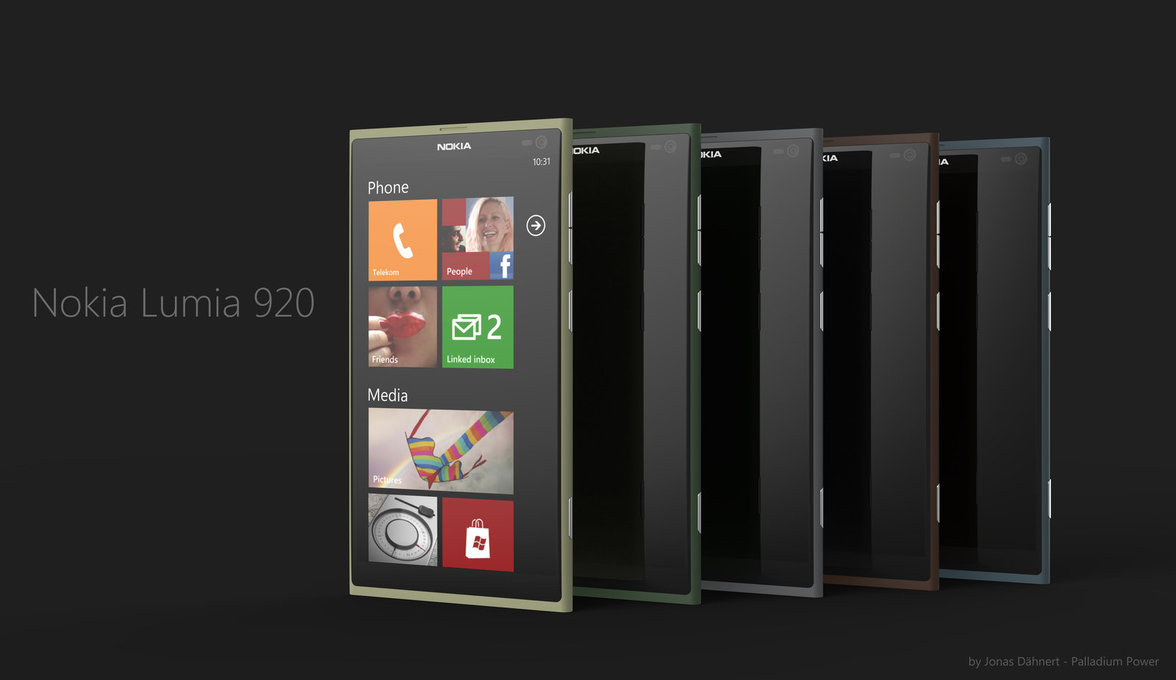
Pictures showing the new Nokia Windows Phone 8 mobile handsets have reportedly been leaked on Twitter.

Pictures, apparently showing the new Nokia Lumia 920 and 820 handsets, were released on Twitter on an account called @evleaks.

The pictures show the handsets, which look similar to Nokia’ earlier Lumia models, in a range of colours, including yellow and red.

The same account was used last week to leak images apparently showing new HTC devices, the Telegraph reports.

According to the paper, the larger of the two, the Lumia 920, has a 4.5-inch display and the smaller Lumia 820 has a 4.3-inch display but comes in more colours.

Nokia and Microsoft are holding a joint event in New York on Wednesday, at which they are expected to announce the new Windows Phone 8 handsets.


Copyright © 2012-19 Today's Technology Information.
Terms of Use | Disclaimer | Privacy Policy | Copyright Notice | Contact Us